In the photograph of cracked glass, a fracture looks like a dark thread against the cloud, then glints against blue sky a little further along. At the fountain, droplets are easy to see against a dark tree and hard to pick out against bright sky. When shooting into the light, first look at what sits directly behind your subject.

Place a single AF point where two cracks intersect. A smooth area gives the camera no distinct edge, so focus may slip to the clouds. Magnify the preview and check the finest lines. If they dissolve into soft patches, focus manually. Keep the camera parallel to a flat pattern so the centre and edges are at similar distances from the lens.
Look at the spray between the basins. Left of the column, individual droplets glint in front of a tree in shade. Further right they compete with bright gaps in the foliage. Step sideways while keeping the camera at the same height. Watch until the dark patch falls directly behind the stream, then choose a shutter speed for the water’s movement.

Imagine a portrait in front of this fountain. The sun picks out the hair, but the eyes remain in shadow. First take a frame without flash and expose for the water and leaves. Keep that exposure in manual mode with a fixed ISO. Set the flash to TTL and try −1 EV flash exposure compensation. Compare the eyes and the shadow under the chin. If the face is still dark, raise flash compensation by a third of a stop. If the shadow that gives the face shape disappears, reduce the flash.
With conventional flash, stay at or below the camera’s sync speed. If the bright background needs a faster shutter, a compatible camera and flash can use high-speed sync (HSS). Its shorter reach may require moving the flash closer. Flash works particularly well on nearby subjects. For glass, position it off the lens axis and check for reflections. For distant waves, work with the sun. Read the external flash guide for more on setting power.
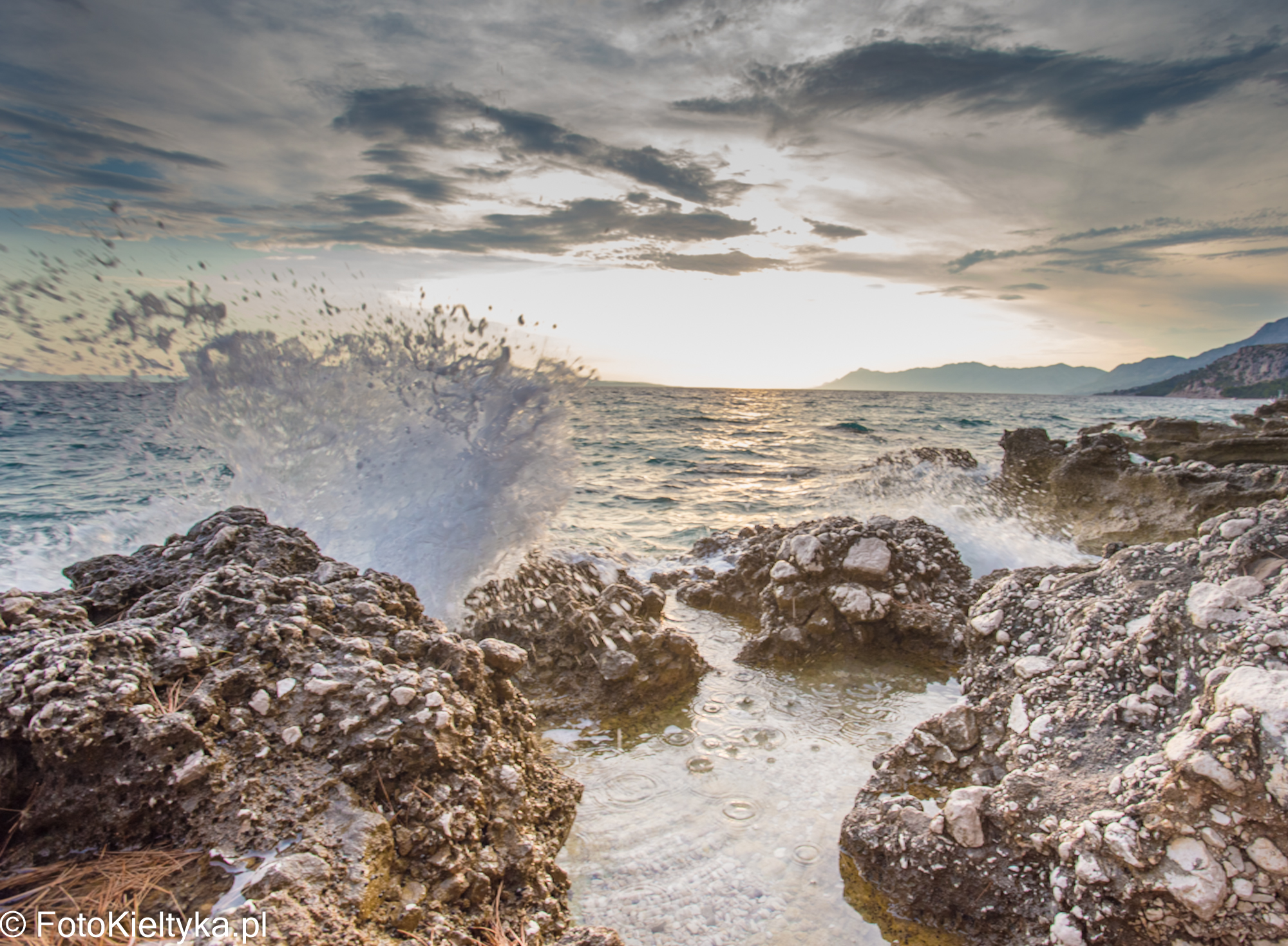
As a wave hits, a bright wall of spray rises over a dark rock. Some is silhouetted against the sea and some against bright sky. Take separate frames and choose the one with the clearest outline. At 1/100 s fast droplets stretch into short streaks. For distinct points try 1/500 s and compensate for lost light with aperture or ISO.
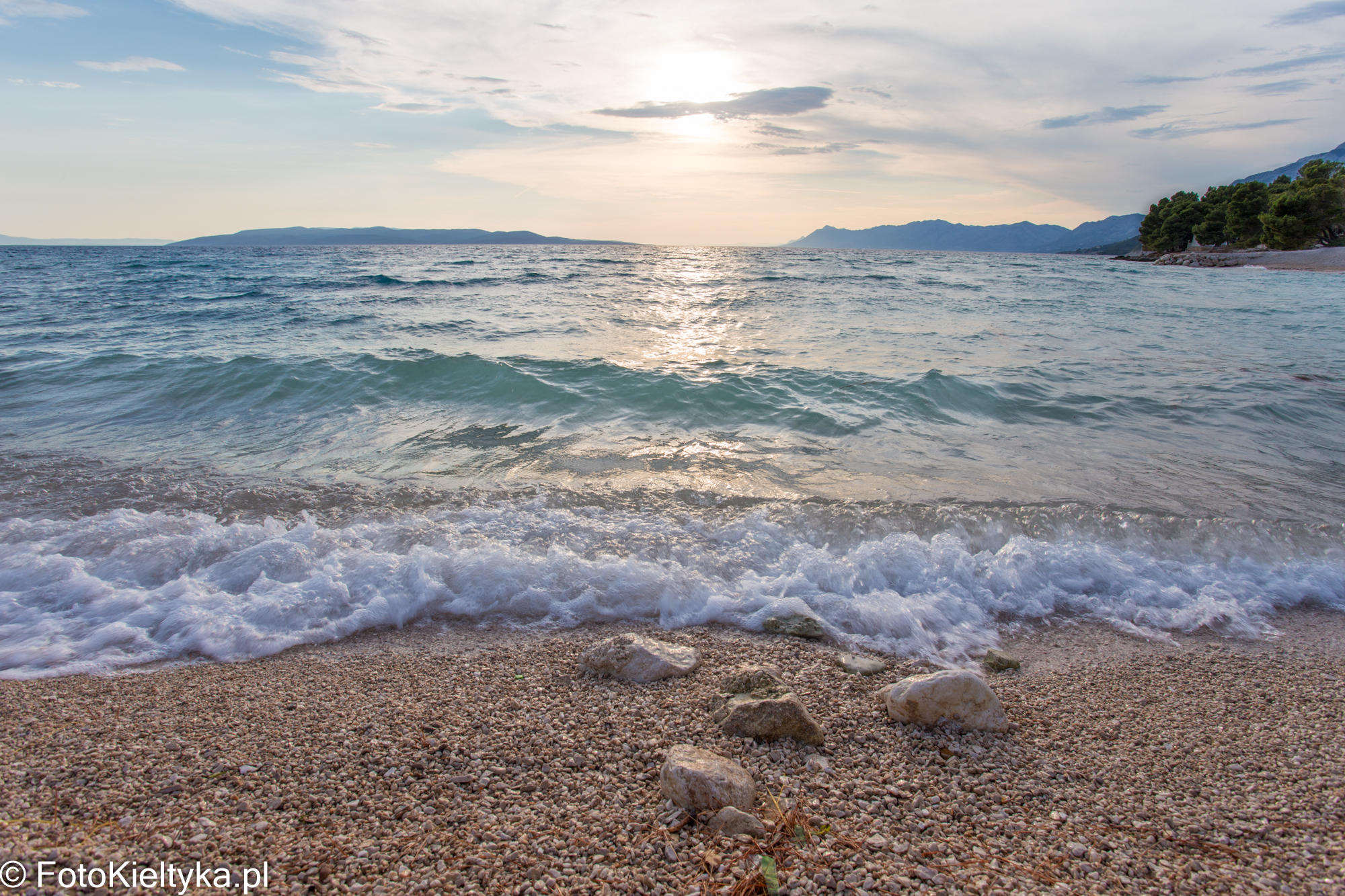
On the beach a bright path leads from the horizon to the incoming wave. Small white reflections give the water its sparkle. Look more closely at the broad band of foam near the shore. Turn on highlight warnings and magnify it. If the transition from its bright edge into the grey body of the wave disappears, reduce exposure by a third of a stop and compare frames. Look for a balance that conveys both the brilliance and the shape of the water.
See the Brela album for more coastal photographs. The sunset photography guide explains how to read the histogram and handle a bright sky.