One evening on the breakwater in Świnoujście can yield three quite different pictures of Stawa Młyny. In a wide view the path leads towards the beacon between the sea and the low sun. Move closer and warm light on the white tower catches the eye. Later still, a fragment of a sail against the clouds can fill the frame. How do you find all three beside the same stretch of sea?
Golden hour comes after sunrise and before sunset. Its length varies with latitude and season. Look for the end of a shadow cast by a tree or building. As the sun sinks, the shadow reaches further into your composition. Arrive early in a city: a neighbouring building may shade the façade well before sunset.
Walk around your subject. With the sun behind you its colour is easy to read. From the side, small shadows reveal texture. When shooting into the light, look at the outline and what lies immediately behind it.

A wide-angle lens makes a distant beacon small. Move to the edge of the path and trace its direction through the viewfinder. In the vertical frame below, the breakwater joins the bottom edge to the tower. Cover the lower half and much of that sense of distance disappears.

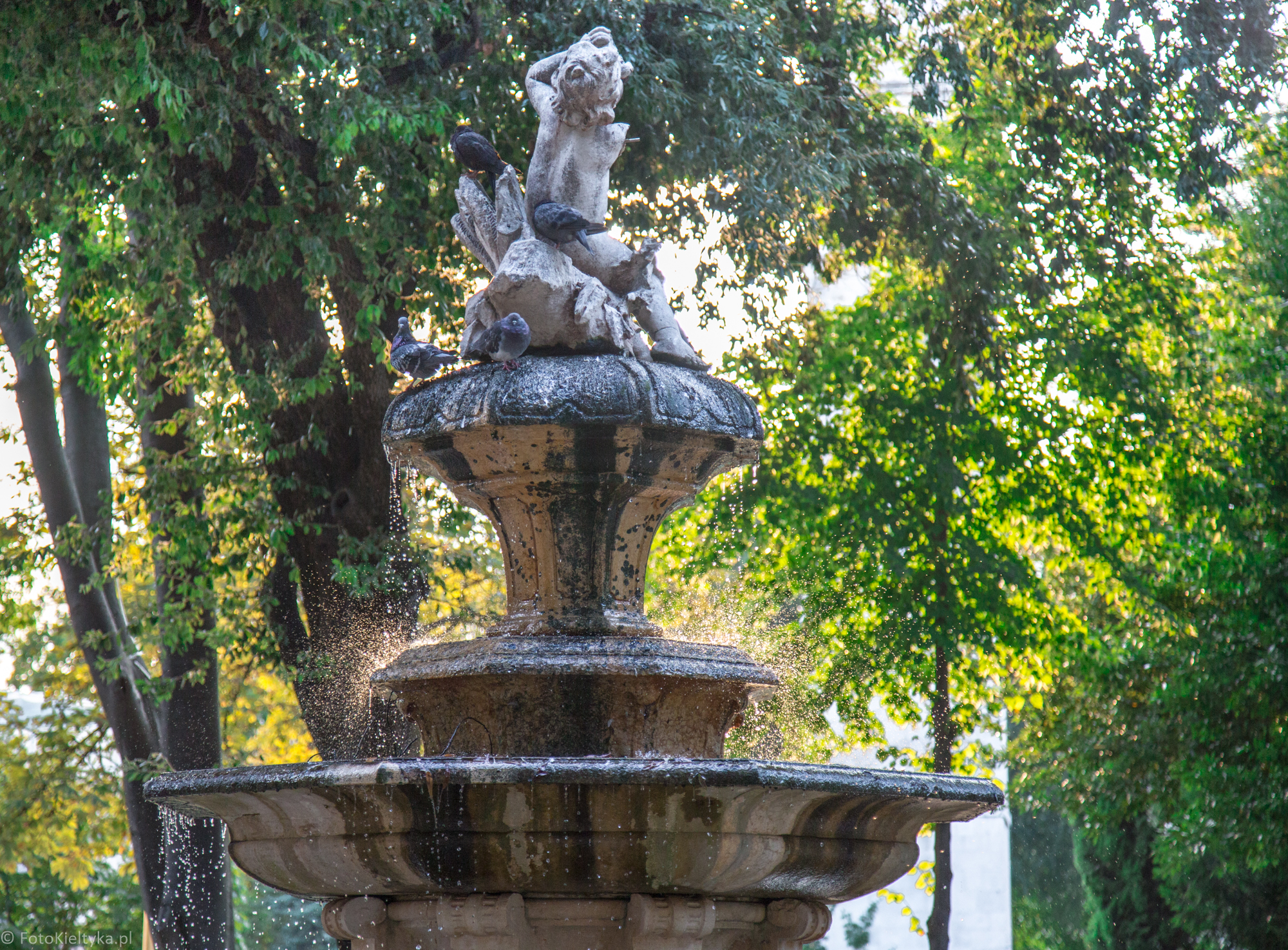
At a fountain, look for a position where the spray falls against shaded foliage. Step back and compare those droplets with others against bright sky. The light still comes from much the same direction, but against a dark background each bright drop stands out. A fast shutter speed picked out the individual splashes here.
On a street, use the same idea with a pedestrian. Frame a strip of sunlight across the pavement before someone walks into it. Leave room for the long shadow. Try 1/250 s for a walking subject and check sharpness at the face or feet.
Place your subject with their back to the low sun and turn their face slightly towards open sky. The sun picks out the hair while the sky lights the face. Take a frame, then move until the head just hides the solar disc. Compare contrast around the eyes. A small shift can clear a milky flare from the picture.
Focus on the nearer eye. If the face looks dark, increase exposure while watching the highlights on the skin. If the background is already losing colour, bounce light onto the face with a white reflector. With side lighting, watch the nose shadow and turn the head slightly until the far eye is clear.
On the white tower, protect the texture of the sunlit wall. In a silhouette of a sail, the colour of the clouds between its slats matters more. Check that area with the highlight warning and adjust exposure. In a saturated sky check the RGB histogram too: the red channel may reach the right edge first.

For comparisons, set a fixed white balance such as Daylight and shoot RAW. In Lightroom compare the white tower with the cooler shadow beside it. If warming the whole image turns both the same orange, ease back. The difference between sun and shade conveys the time of day.
Choose a person, sculpture or tree. Keep the same distance and focal length and walk around it for three frames: front light, side light and backlight. Expose for the same part of the subject each time. Compare the results side by side. Which shows the texture best? In which is the outline alone enough to recognise the subject?
Explore the Świnoujście album. For the solar disc and bright sky, see how to photograph a sunset. The guides to full sun and blue hour cover the light on either side of golden hour.