Look at the gap between the pilot’s feet and the grass. While the pilot stands on the slope, the picture shows preparation. A moment later there is air in that gap, and the lake in the background gives a sense of height. On Monte Baldo, small changes like these tell the story of a flight.
Stand to one side, clear of the take-off run and lines. Choose a position that shows the slope in profile. Before the wing rises, allow room above the pilot for the whole canopy. Check the lower edge too: a strip of grass is enough to show where the pilot stands. Filling the frame with the wing alone makes this first stage harder to read.
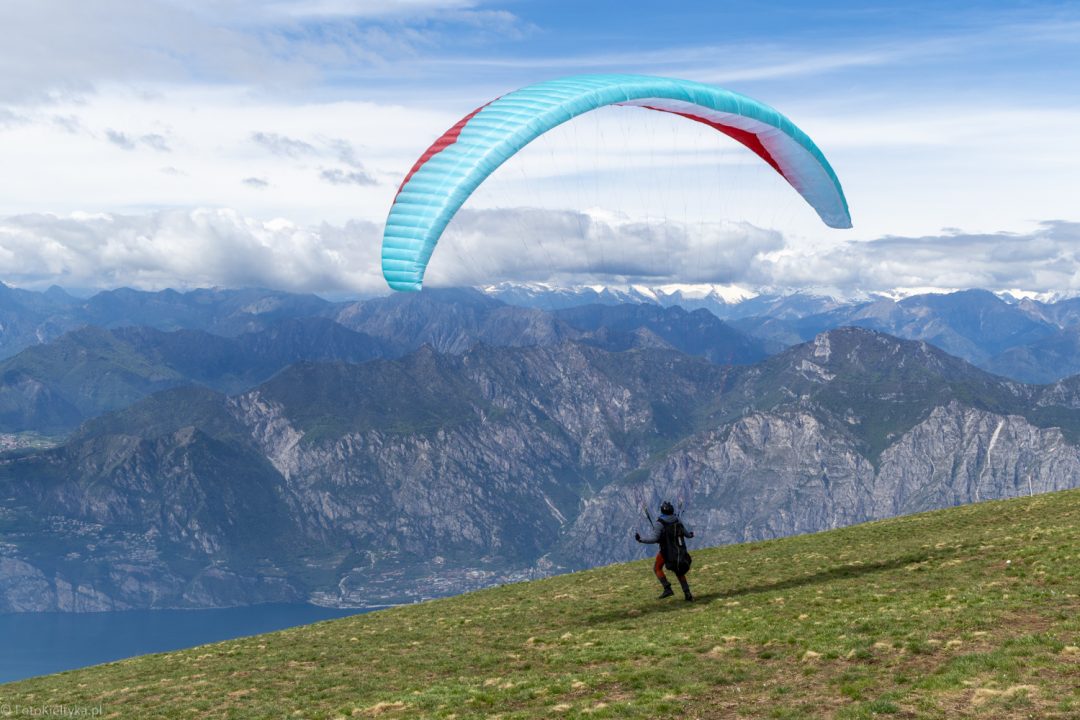
Use continuous autofocus (AF-C or Servo AF). Start tracking while the pilot is still on the ground. If the camera picks out the rocks behind, reduce the AF area and keep it on the harness. Follow the pilot smoothly through the shutter release. A short burst as the feet leave the ground gives you several arrangements of legs and wing to choose from.

Both launch photographs used 1/320 s. In similar light, start there and magnify the pilot to judge the result. A pilot crossing close to you moves faster through the viewfinder than a distant wing above the lake. If the slope is sharp but the harness trails in the direction of travel, try 1/640 s. At the same ISO, opening from f/16 to f/11 roughly balances the exposure.
Watch the background while tracking. As the wing moves from bright sky to a dark mountain, the meter may change the exposure even though the pilot is still in the same sunlight. In steady light, set shutter speed, aperture and ISO manually from a test frame. Recheck the brightest fabric if a cloud covers the sun.
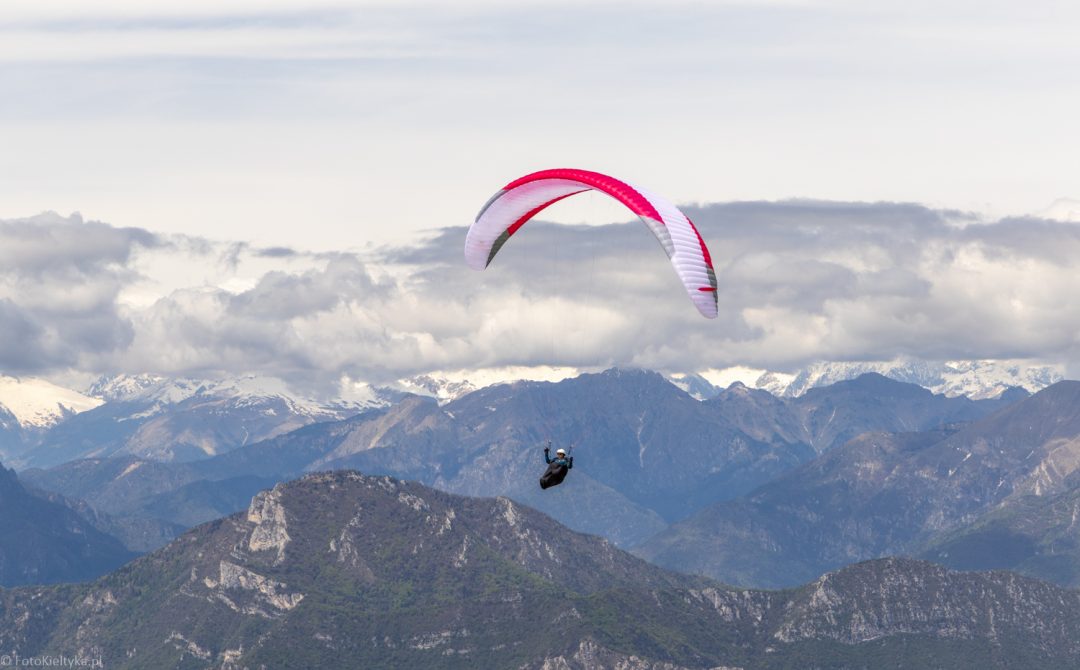
With a longer lens it is easy to follow the wing so closely that you miss a ridge cutting through the pilot. Watch the patch of background ahead. Wait for the dark harness to cross a lighter band of mountains. Leave room ahead of the glider, especially if the tilt of the wing suggests a turn.
In the last frame, find the green wing and trace the cliff down towards the lake. The tiny paraglider gives the rock face scale. A tighter crop would make the pilot easier to see but give up some of that sense of height. Check the thumbnail: can you still pick out the wing against the slope?
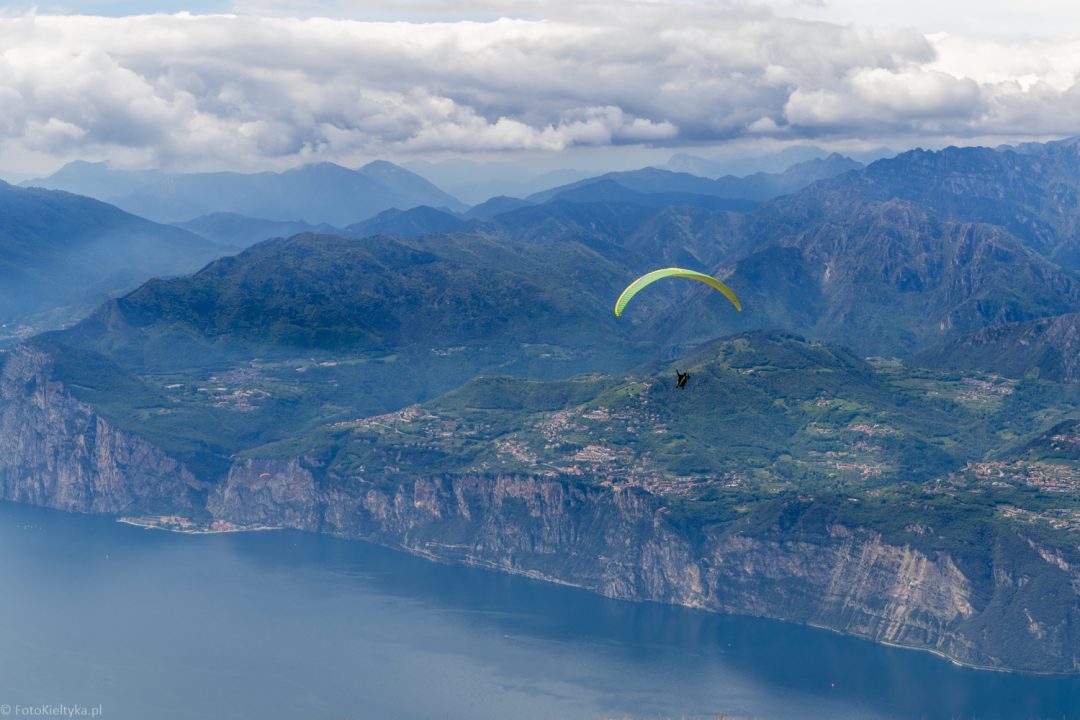
On your next outing try a three-picture sequence: the pilot on the ground, the instant of lift-off and the flight in its landscape. Explore Monte Baldo and compare the backgrounds with Skrzyczne. See the shutter speed guide for more on motion and the Adobe Stock collection for licensing.